OPEN ASSEMBLY
Experiments in Aesthetics and Politics









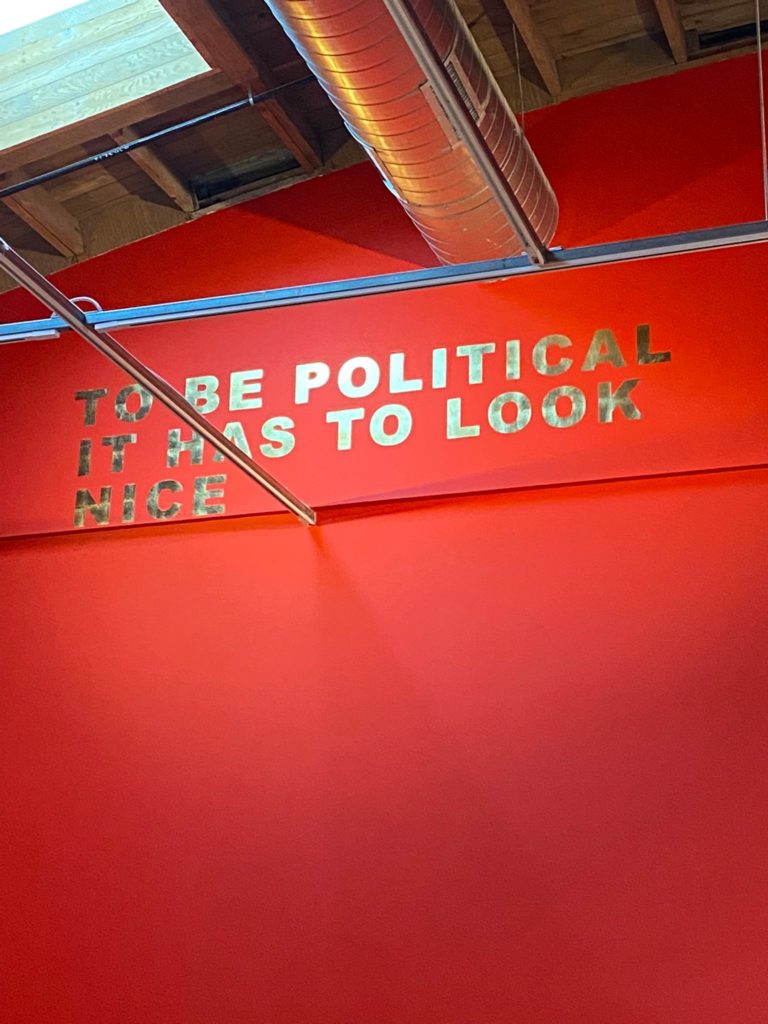

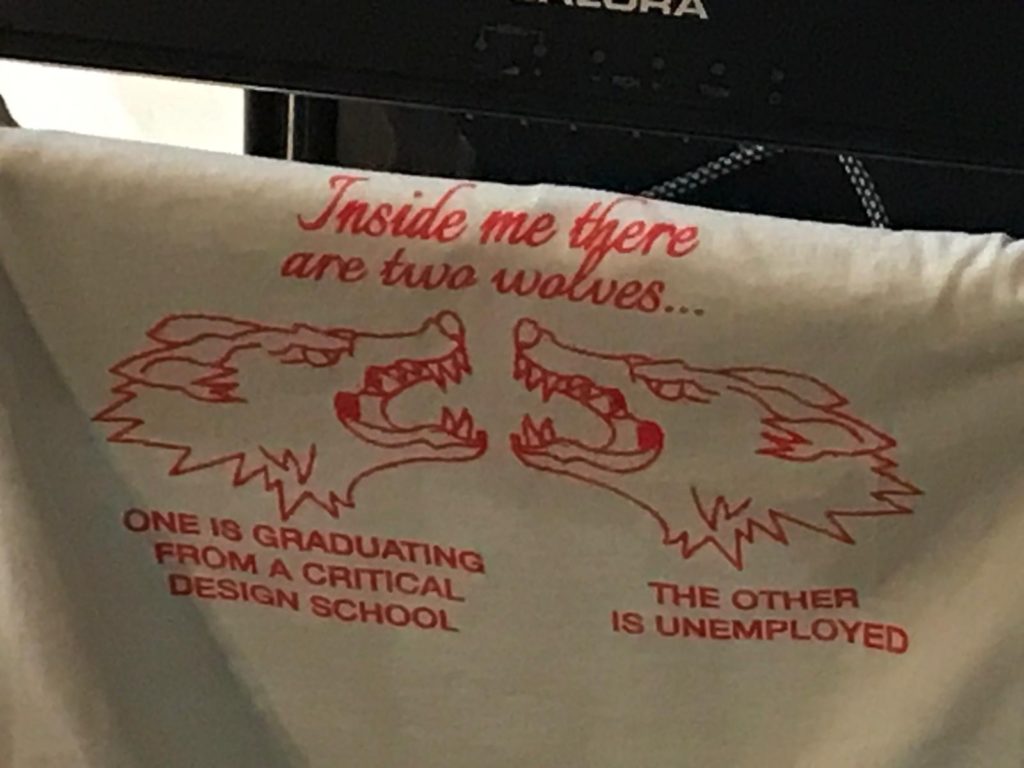







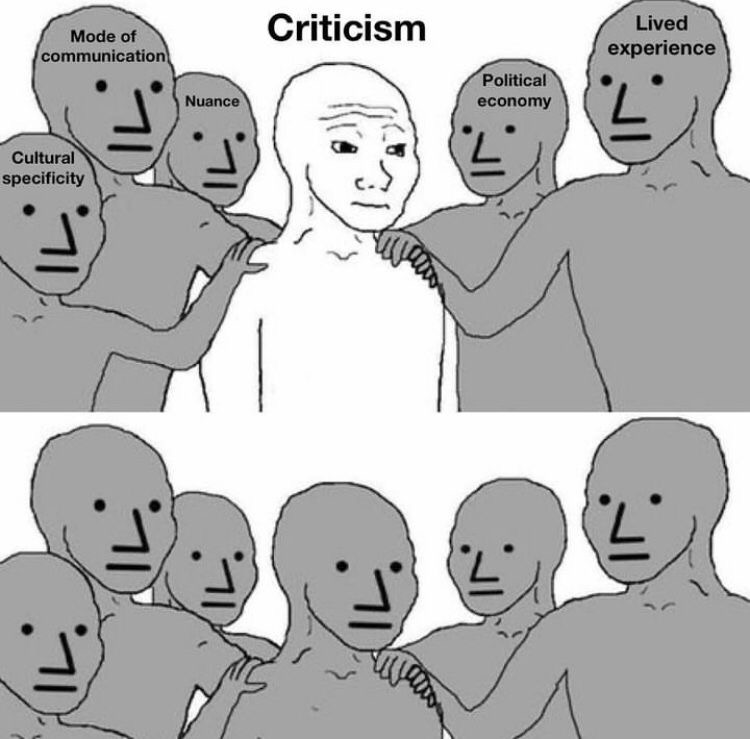











No one has time for “New Problems” at CalArts any more
Or, how to become an “agent of change.”

As the 2025 Fall Lecture series came to a close, we, the students in the Aesthetics and Politics program, received an email prompting us to submit our course evaluations for CMAP-623-02, the associated required class. The email read:
“As of this academic year, the Office of Institutional Effectiveness is handling course evaluations on behalf of the schools.”1
Institutional effectiveness? First I’ve heard of it. One of the things that makes CalArts notoriously special is its defectiveness.2 The romance of the arts institution is its commitment to chaos, its affordance of time spent swimming aimlessly in the collective unconscious (or the pool); students’ dreams ricocheting off material constraints, the heat of friction, the cultivation of “new problems” rather than rote solutions. Effectiveness, on the other hand, follows from efficiency, the worldview of the factory. Of course, CalArts and its students are not insulated from the economic reality surrounding them, and must balance the contained chaos of art making with the ever-increasing demands of market capitalism. Perhaps the introduction of effectiveness into an otherwise ineffective space is meant to address the pervasive feeling that no one has time for “new problems” any more.
Given this ascendant tension in the institute today, I want to better understand this mysterious Office that is “handling” the evaluation process “on behalf” of the individual schools, and what its “effective” vision means for the bodies that inhabit them. The etymology of “behalf” comes from the Old English words meaning “by” and “side” or “nearby.” Similarly, one “handles” in an embodied way that which one is “beside” and close to, close enough to touch.
Ah, to be held in the embrace of an Institution! To be rendered “effective” through proximity! A dream of not only corporate (read, corporeal) organizational strategy but also the modern administrative state. This is governmentality at its most direct, a logic of control rooted in an imbrication of abstract, quantitative data and sensual, material bios.
It will come as no surprise to those who have taken Arne De Boever’s Contemporary Political Thought course (CMAP-622) or read Wendy Brown’s Undoing the Demos that this biopolitical approach to institutional governance stems from what the latter calls “neoliberal rationality,” the drive in contemporary times towards the “economization of everything.”3 To many Millennials and Gen Z students, the idea is so obvious that it hardly registers as an idea at all. Brown extends Michel Foucault’s definition of neoliberalism as a dominant discourse that produces individual subjectivities grounded in economic logic to describe the forces eroding democratic institutions and politics. But by the time Brown published the book in 2015, society had already experienced the 2008 financial crash, and the main worry was less “is my subjectivity captured by neoliberalism” than “how can I find a job?”
We dive into this theoretical swamp, however, not for solutions or answers, but as a way to better “handle” the ideology of the Institution, to come up beside it in its natural habitat. In other words, to speak its language more clearly; in other words, to inhabit it.
Neoliberalism at the Arts Factory
The Office of Institutional Effectiveness at CalArts describes itself on its website thusly:
“The office frames and informs the institutional strategic dialogue in active partnership with colleagues, building a culture of evidence to support planning and management, as agents of change at the California Institute of the Arts and in higher education generally.”4
Much of this copy is a close relative (how close, one wonders…) to AI slop, regurgitating buzzwords and the coded language of consultants, furiously fragmenting and recombining letter combinations within the belly of the black box. Now inundated with this aesthetic, the awkward addition of “the” in the first sentence might go completely unnoticed by most readers (and really, who has even visited this site intending to read it?). And yes, while this paragraph probably is more of a performative gesture (for who? Prospective students? A Board? Again, who has even visited this site? We risk disappearing through the looking glass here) than meaningful writing, the fact that they are asking me to write a maximum of 10,000 words right at the busiest time of the semester makes me wonder how seriously I should take what they say.5
The inclusion of “the” in the phrase “the institutional strategic dialogue” suggests what we have known all along, that this is anything but “dialogic,” at least in the sense that Mikhail Bakhtin meant it. (Perhaps this belies a slip between the English-dialect “dialogue” in place of the American “dialog,” a quirk of the current era of LLMs.) For Bakhtin, language and meaning emerged in ongoing conversation between irreducibly “other” parties: participants for whom settled, singular definitions could never be reached.6 The “the” suggests precisely such a settled, monolithic form of “strategic dialogue,” which itself sounds more like a plan for battle than something open and in “active partnership with colleagues.”
The “culture of evidence” also speaks to Brown’s critique of higher education in Undoing: a belief that such a thing as “culture” might be given shape through “evidence,” whose terms and facticity are themselves products of an economized ideology– a terrifying prospect for any arts institution. Evidence further abstracts the fleshy, human bodies that make up the “corporation” into sites of measurement and control. Is not a culture of evidence also the culture of the panopticon?
All of this, so far, is troubling but still forgivable enough for any “progressive” organization to claim in its mission statement. And yet, the Office of Institutional Effectiveness goes further, stating that its ultimate goal is to create “agents of change” at CalArts and “in higher education generally.” This lauding of disruption, changemaking, impact, and innovation is as stale as it is disingenuous. What is being changed? For what reasons? If the aim of an office is “effectiveness,” the only change it can rightfully promulgate is the change of no-change, the solidifying of change into a systematized, monotonous “culture of evidence.” Actual change is never effective. It is deterritorializing, defamiliarizing, defective. The change being sold to us in this appropriation of radical language is the superficial change of consumerism: novelty.
The Art of Mimesis
If you were in Andrew Culp’s Contemporary Aesthetic Theory class (CMAP-621) in 2024, one of the first texts you would have read is Susan Buck-Morss’ essay “Aesthetics and Anaesthetics: Walter Benjamin’s Artwork Essay Reconsidered” from 1992. She draws from Benjamin’s writing on art and fascism in “The Work of Art in the Age of Mechanical Reproducibility,” a critique of the numbing effects of Western modernity and its industrial-scale aesthetic shocks. In it, Benjamin states:
“Humanity that, according to Homer, was once an object of spectacle for the Olympian gods, now is one for itself. Its self-alienation has reached such a degree that it is capable of experiencing its own destruction as an aesthetic enjoyment of the highest order. So it is with the aestheticization of politics, which is being managed by fascism.”7
Buck-Morss outlines how the alienating industrial and post-industrial practice of imitation (“mimetic repetition”) is a “defensive reflex” serving to “protect both the body from the trauma of accident and the psyche from the trauma of perceptual shock.”8 In a society driven to electric and chemical anesthetization, we are cut off from our “power to respond politically” to our social reality. We are too busy protecting our physical bodies (which the recent threat of diminished SNAP benefits proves is no abstract threat) and our psyches (warped as they may be by neoliberal rationality) to effect meaningful political change. The fascists’ “management” of politics as aesthetics, as Benjamin calls it, becomes the default, a background over which lives are lived, schools are administered, and evidence is gathered.
It is important to stress the role of mimesis in this aesthetico-political regime. Repetition alone does not generate the potential for management (or for a Foucaultian, “governmentality”). We must understand the representational and derivative nature of a repeated act, which layers meaning and refined form atop the physical and embodied content. An economic exchange, imbued with its contextual sociopolitical significance, for example, becomes part of modern, class-marked consumer culture.
The mimicry of mimesis, following René Girard, is desire structured around a jealous subject imitating the actions of another.9 Girard’s theory clarifies the dual function of mimesis: jealousy protects the subject from harm by identifying an object already deemed safe, while also embedding them within sociopolitical norms sanctioned by another. In concert with Benjamin’s aestheticization of politics, Wilhelm Reich diagnoses this irrational structure as the kernel of fascist desire.10 It also helps to explain desire’s peculiarly anesthetizing role in modern society at large, and specifically at CalArts.
As higher education is forced to compete more and more on economic grounds, it increasingly participates in mimetic logics that produce these fascistic and anesthetic effects. Girard describes mimetic desire as a cycle of rivalry over a shared object of desire — often two frienemies competing over a romantic partner — that necessarily escalates into bloody violence unless a (creative) scapegoat redirects their aggression elsewhere. For CalArts today, the object of desire is enrollment, as higher enrollment means higher profits. It must be stressed that the students themselves (or the student body itself) are not the desired object, at least from the institution’s perspective, but rather their quantification and financialization. Because of this divide between corporeal student and spreadsheet cell, CalArts’ mimetic rivals are not just other arts institutions vying for applicants, but every other business competing on the global stage for growth and investment. This creates a fever-pitched neoliberalism, in which corporate partnerships, “new technology” initiatives, and the promotion of professionalization overtake the arts institution’s originary mission and values.
This mimetic competition and the scapegoats it produces submit the lofty goals of arts education and experimentation to the cold, alienating economics of the factory. Art becomes more and more beholden to entertainment metrics as institutional decision-making converges on the same strategic plans offered by highly paid corporate consultants across every sector. For Girard, mimetic scapegoats can be productive, generating art and culture among other outcomes. But CalArts, captured by neoliberal rationality, is stuck imitating the creative solutions of others. This particular cycle of desire is a numbing repetition compulsion, a post-traumatic rehearsing of a foundational lack for which imperfect scapegoats can only ever partially satisfy.
Agents of Change
What can be said to truly change in a society captured by novelty and numbed by mimesis? A thread yet to be pulled is the thread of bios, the material reality of the bodies that inhabit the school before it is quantified and made effective. In a society or institution that structures itself around the “included exclusion” of bare life, its scapegoats are never far from view.11 In fact, they are among us; often they are us, or some part of us, within our very selves. By refusing quantification and evaluation and insisting on a return to our bodily experience, we can begin to change the political reality on the ground. As Benjamin closes his Work of Art essay: “Communism responds with the politicization of art.” In response to fascist management, we must take up our aesthetic and corporeal experiences as the basis for a new, collective politics.
To this, one might point out that the feminists at CalArts were arguing for something like this back in the 70s. Perhaps the one to do that would be Janet Sarbanes (CMAP-624), whose book Letters on the Autonomy Project sketches a partial history of CalArts’ rebellious past, extending beyond the well-known Womanhouse and Feminist Art Program.12 Second-wave feminists should indeed be credited with a clear articulation of a corporeal politics and with offering tangible examples of how a resistance to “agents of change” and “a culture of evidence” could look and feel.
But Sarbanes’ research does more than just rehash the legacy of CalArts’ experimentalism before the neoliberal turn. Her series of letters links corporeal aesthetics and art practices to a mode of collective politics whose horizon extends beyond capitalism’s individualistic and mimetic loops. For Sarbanes, following the work of Cornelius Castoriadis and a heteroglossia of feminist and Black Radical thinkers, creative and political autonomy is relational and interdependent, an ongoing “individual-and-collective” practice which harnesses the perpetual flux of the unconscious to collaboratively generate new desires, new art forms, and new social realities.13
I said that no one has time for “New Problems” at CalArts, but we know that in the institute’s history, there are many examples of bodies and collections of bodies that have made time for such problematizing. As neoliberal rationality and real material precarity expand, our awareness of this kind of time shrinks. The Office of Institutional Effectiveness precipitates its vacuum suction. The first step in reclaiming time and making real change realized at CalArts is to make ourselves and our art ineffective.
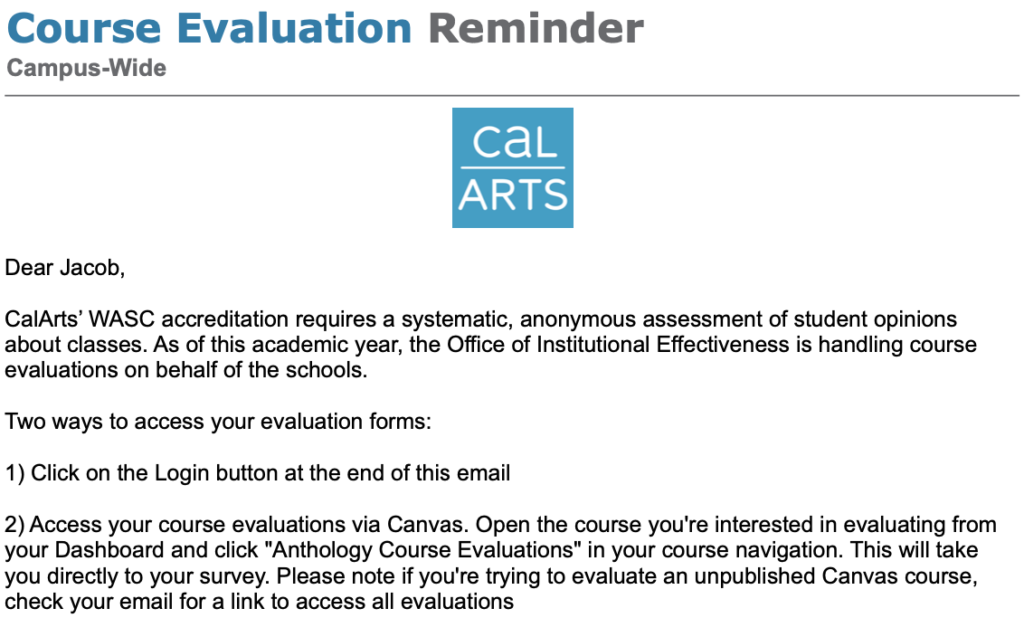
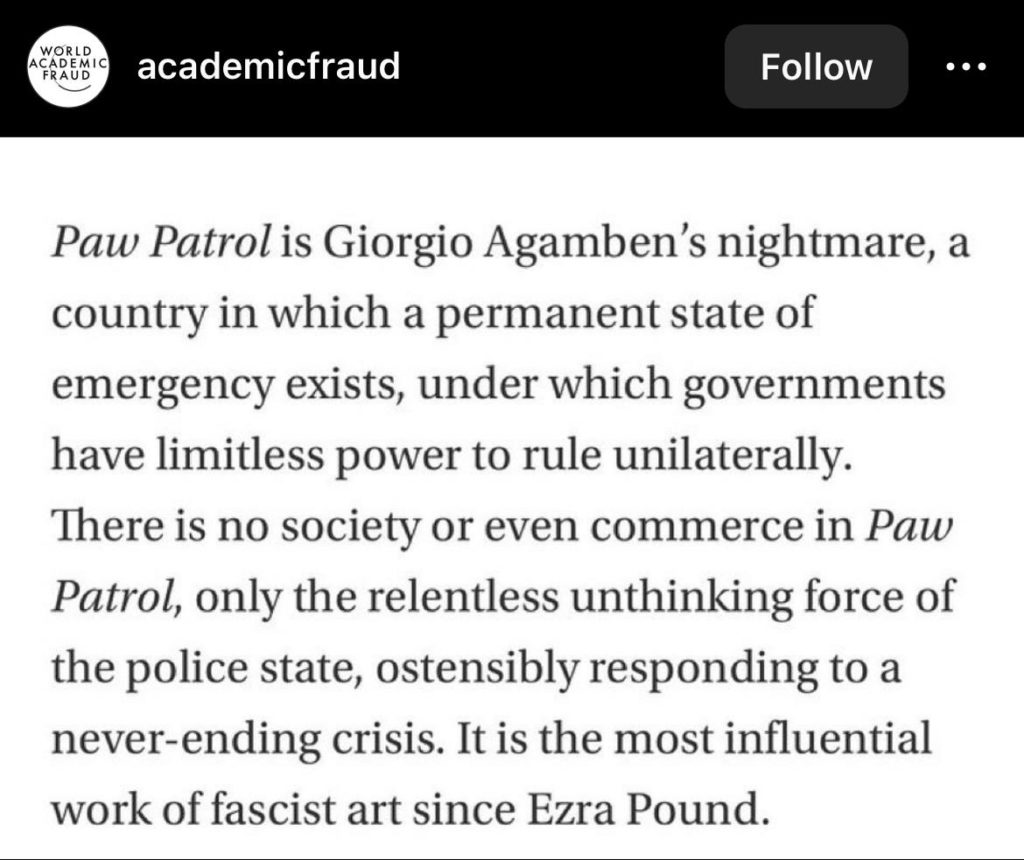
- See the above screenshot. ↩︎
- This ineffectuality is reflected in the school’s ramshackle architecture as well. Imagined initially as housing “all the arts under one roof,” the building is a labyrinth of letters and numbers, hallways and connectors. And more recently, the addition of semi-permanent, unadorned bunkers set off from the main building where many of the Critical Studies classes are held. ↩︎
- See both Brown, Undoing the Demos: Neoliberalism’s Stealth Revolution. Princeton U. Press, 2015, and Brown, In the Ruins of Neoliberalism: The Rise of Antidemocratic Politics in the West, Columbia U. Press, 2019, which adds a moral layer to the neoliberal project and its corrosive effects on Western democracies. ↩︎
- https://calarts.edu/about-calarts/institutional-effectiveness, accessed 12/9/2025. ↩︎
- One wonders if they read these entries or just use algorithms to extract quantifiable metrics from them? Why not pose these evaluations as multiple-choice questions? ↩︎
- Bakhtin, Art and Answerability: Early Philosophical Essays, U. of Texas Press, 1990. ↩︎
- Benjamin, “The Work of Art in the Age of Mechanical Reproducibility”, Illuminations: Essays and Reflections. Edited by Hannah Arendt, translated by Harry Zohn, Schocken Books, 1969. ↩︎
- Buck-Morss, “Aesthetics and Anaesthetics: Walter Benjamin’s Artwork Essay Reconsidered” October, Vol. 62 (Autumn, 1992), pp. 3-41. ↩︎
- Girard, Violence and the Sacred. Translated by Patrick Gregory. Johns Hopkins U. Press, 1977. ↩︎
- Reich. The Mass Psychology of Fascism. Orgone Institute Press, 1946. ↩︎
- Agamben, Homo Sacer. Sovereign Power and Bare Life. Stanford: Stanford University Press, 1998. ↩︎
- Sarbanes, Letters on the Autonomy Project, punctum books, 2022. ↩︎
- Ibid. especially pp. 19-34. ↩︎